I am continually struck by the depth of the Psalms and the theological richness of the Church’s lectionary. As I worked on my setting of Psalm 146, I was reminded that there may be no better way to understand a psalm than to attempt to illuminate it with music.
A Self-Command to Praise
Psalm 146 is a psalm of pure praise. It asks nothing of us but that we sing—and yet it reveals something deeper. The opening command, “Praise the Lord, O my soul,” is directed inward. The psalmist calls his own soul away from distraction and toward God. This is not spontaneous emotion, but discipline: a deliberate turning of the self toward the One who is worthy of praise.
“I will praise the Lord as long as I live…” (v. 2)
This is not praise dependent on circumstances, but a permanent orientation of the soul. The psalmist does not wait for the feeling to come—he commands praise because God is worthy of it.
The Psalm in Its Place
To understand the full weight of Psalm 146, it helps to know where it stands in the Psalter. This psalm is the first of the five great Hallel psalms — Psalms 146 through 150 — that bring the entire book of Psalms to its close. Each one begins and ends with Hallelujah. Together they form the Psalter’s final, sustained, escalating cry of praise.
The Psalter is a long and honest book. It contains some of the most anguished cries in all of Scripture — psalms of dereliction, of accusation, of bitter lament. It is a book that knows what suffering is. And yet it does not end there. It ends here, in praise. These final five psalms are the Psalter’s last word on the human condition before God: not complaint, not confusion, not silence — but Hallelujah. Praise the Lord.
Psalm 146 stands at the opening of that final answer. Which means that when the psalmist commands his soul to praise, he is not speaking from ease or comfort. He is speaking from the far side of everything the Psalter has already said. This is praise that has come through something. And that is precisely why it can be trusted.
The Bookends of the Psalter
But there is something even more striking about the position of this psalm — something that only becomes visible when you stand back and look at the whole of the Psalter at once.
The Psalter opens with Psalm 1 and its great contrast between the righteous man and the wicked:
Blessed is the man who walks not in the counsel of the wicked… the wicked are not so, but are like chaff that the wind drives away.
The entire Psalter lives under that contrast. And then, at the far end of the book, as the great closing doxology begins, Psalm 146 returns to exactly the same contrast — but now we see whose hand is behind it:
The Lord watches over the sojourner; he upholds the widow and the fatherless, but the way of the wicked he brings to ruin.
Psalm 1 describes the two ways. Psalm 146 reveals the God who governs them. The soul that has traveled through the entire Psalter — through all its lament and penitence and praise — arrives here, at this psalm, and understands at last why the blessed man of Psalm 1 is blessed. Because this God reigns. Because this God acts. Because this God is worthy of every hallelujah the final five psalms can offer.
The Christological Heart
But we cannot leave this observation without pressing it to its proper conclusion. Because there is truly only one Blessed Man of Psalm 1.
Who is the man who has ever walked perfectly in righteousness, whose delight is fully in the law of the Lord, in whom everything prospers? Every honest reader of Psalm 1 knows that it is not describing them. We have all walked in the counsel of the wicked. We have all stood in the way of sinners. We have all sat in the seat of scoffers. The psalm sets up a category — the blessed man, the righteous man — that human beings can aspire to but cannot inhabit.
There is only one man who fully and perfectly lives Psalm 1. That man is Jesus Christ.
The Sermon on the Mount confirms this. The Beatitudes are not just a new law for us to achieve. They are a portrait of the one who has already achieved it — and who offers us his blessedness as a gift. Blessed is the man is, at its deepest level, a Messianic proclamation. It is pointing, across the centuries, to the one in whom it is finally and fully true.
And then we return to Psalm 146 — to the God who sets prisoners free, opens blind eyes, lifts up those bowed down, gives food to the hungry, upholds the widow and the fatherless. And we read Luke 4, where Jesus stands in the synagogue at Nazareth and reads from Isaiah:
The Spirit of the Lord is upon me, because he has anointed me to proclaim good news to the poor. He has sent me to proclaim liberty to the captives and recovering of sight to the blind, to set at liberty those who are oppressed.
Jesus is not merely doing things that resemble what Psalm 146 describes. He is doing what Psalm 146 describes because He is the God of Psalm 146 — incarnate, present, acting in history in the most direct and personal way possible. Every blind eye he opened, every leper he cleansed, every sinner he forgave, every dead man he raised — these were not merely miracles. They were the Lord of Psalm 146 doing what he has always done, now doing it in person, in flesh and blood.
The Psalter opens with the Blessed Man. It closes its great body of teaching with the God who acts in mercy and justice. In Jesus Christ these two are one. He is simultaneously the righteous man of Psalm 1 and the Lord of Psalm 146. And the Gospel — the good news that makes all this praise possible — is that the way of the wicked was brought to ruin not in us but in him. The Blessed Man bore our curse. The God of the widow and the fatherless became the forsaken one, so that the forsaken might be upheld.
This is why the soul commands itself to praise. This is why the Hallelujah cannot be contained. This is why the Psalter ends not in lament but in doxology. Because this God — this man — reigns forever.
The Fifteenth Sunday after Trinity
In the one-year lectionary, Psalm 146 is appointed for the Fifteenth Sunday after Trinity, and the readings for that Sunday reward careful attention.
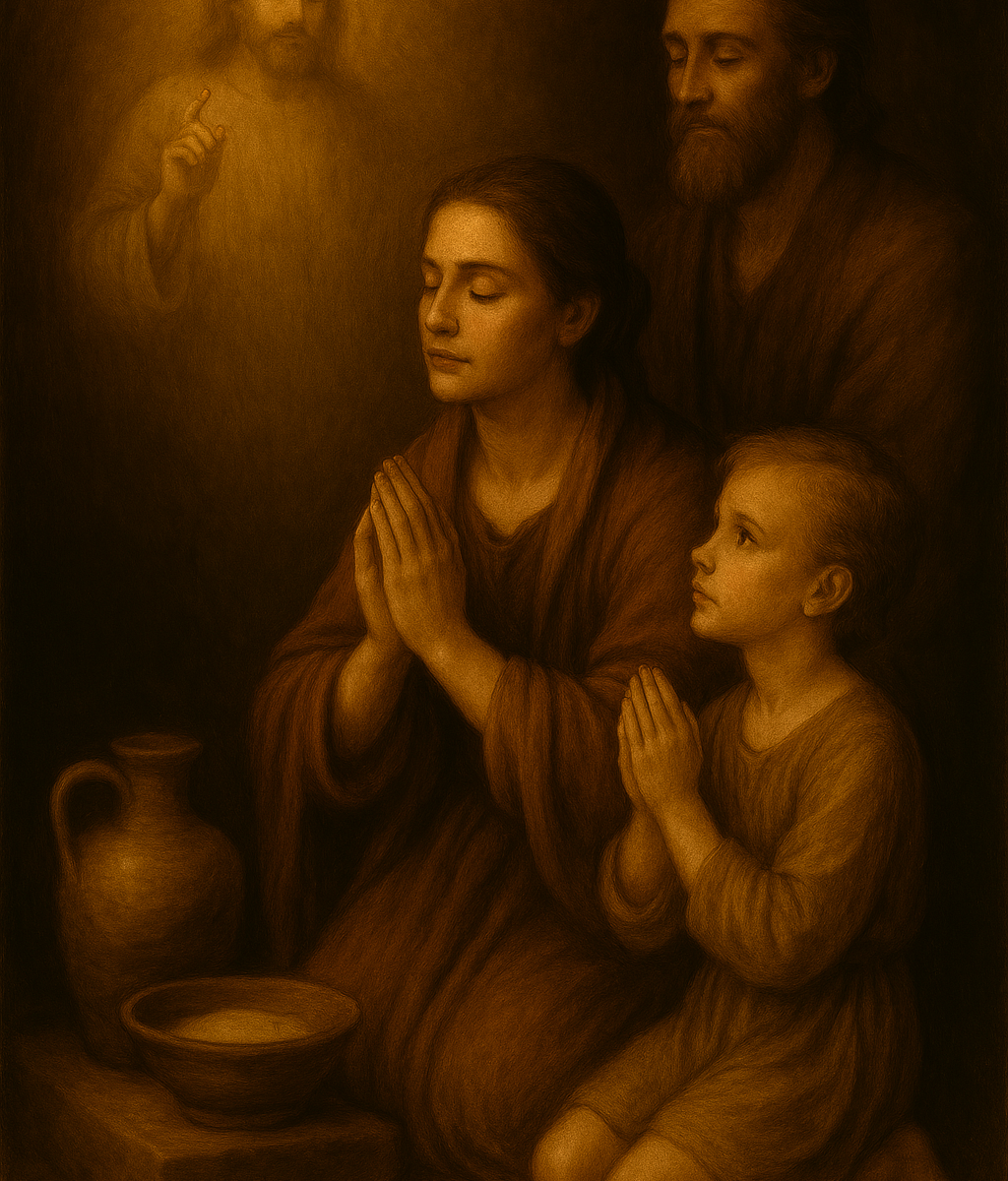
The Old Testament reading from 1 Kings 17 gives us the widow of Zarephath — a woman with nothing left, whose jar of flour does not run out and whose jug of oil does not fail. This is precisely the God of Psalm 146. The widow who appears in the psalm is not an abstraction. She is this woman, with her handful of flour and her dying son, whom God sees and does not abandon.
The Epistle from Galatians 5-6 gives us Paul’s exhortation: Let us not grow weary of doing good, for in due season we will reap, if we do not give up. Do not put your trust in princes — in human power and human plans that perish. Walk in the Spirit. The contrast the psalm draws between the trustworthy God and the untrustworthy powerful is exactly the contrast Paul is drawing between flesh and Spirit.
And the Gospel from Matthew 6 gives us Jesus himself: Do not be anxious about your life… seek first the kingdom of God. The God who clothes the lilies and feeds the birds is the God who gives food to the hungry in Psalm 146. Jesus is expounding the psalm in the Sermon on the Mount. You cannot fully understand Matthew 6:25-34 without Psalm 146, and you cannot fully understand Psalm 146 without Matthew 6:25-34.
Psalm 146 stands between these readings like a hinge — naming the God whom Elijah trusted, whom the birds of the air trust, whom the lilies of the field trust. He is not an abstraction. He is this God, who acts, in history, for real people in real need.
The Music
When I began setting this psalm, the challenge was immediately apparent. How do you set a text that is itself already, in itself, a kind of musical form? The psalm doesn’t need decoration. It needs illumination.
The answer came in the opening gesture. Rather than beginning with a full-throated declaration, I let the voices enter one by one from silence, each offering a fragment — Praise… Praise the Lord… Praise the Lord… — as if a congregation were assembling from different directions, each voice finding its way to the same word. This is what praise actually looks like in the church. It doesn’t arrive all at once, fully formed. It gathers. It builds. It becomes something larger than any single voice can produce alone.
The Alleluia section that follows is the emotional center of the piece. I wanted it to feel like an outpouring — something that could not be contained within the more measured pace of the opening. The voices overlap and accumulate, each carrying the word forward as the others sustain it, until the full fortissimo arrives not as a performance but as an inevitability. This is what happens when praise finds its fullest voice.
The psalm verse section — The Lord sets the prisoners free; the Lord opens the eyes of the blind; the Lord lifts up those who are bowed down — called for a different texture entirely. Here all four voices move together, the text given its full weight in homophony. These are not decorations. These are the specific, concrete acts of a God who intervenes in human suffering. The music needs to stop and say so clearly.
The reprise of the opening material — Praise the Lord, O my soul — arrives quietly, as if the soul, having surveyed all these mercies, returns to the beginning with deeper understanding. The praise is the same. The soul that sings it has been enlarged.
The piece closes with the Alleluia and Amen, the voices gathering one final time over a grand pause — a breath, a moment of silence — before the final word is spoken. Amen. So be it. Let it be so. The praise becomes a prayer, and the prayer becomes a vow.